
Early 2027 NFL Draft Rankings 2.0: My October Top 25
By George Albarran
Jeremiah Smith stays at No. 1, but the quarterback picture is getting interesting, and several defenders are pushing their way up my board. These are my top 25 prospects, what I see when I watch them and what I still need to see.
Rankings reflect my Oct. 15 board, with production through games played Oct. 10.
1. Jeremiah Smith, WR, Ohio State
Man, what answer do you have for this guy? Give Smith space and he eats it up. Get into his body and he’s strong enough to play through you. Then he catches the football, and now you have to bring him down. That’s where the Julio Jones and Andre Johnson flashes come from for me. He combines that size and power with the quickness to get out of breaks like a much smaller receiver.
Smith has 48 catches for 916 yards and 11 touchdowns, including 11 catches for 206 yards and two scores against Iowa. He can win outside, in the slot, underneath and down the field. I see a receiver you build an offense around. He stays at No. 1.
2. Colin Simmons, EDGE, Texas
I had Simmons at No. 2 before the season, and he stays there. When I first watched him, a flash of Derrick Thomas came to mind. The sudden first step, the urgency and the feeling that one rush could change the game. Thomas set the NFL single-game record with seven sacks. Then Simmons goes out and gets 5½ against Tennessee. Boy, that brought the comparison right back.
Simmons has 9½ sacks and 12 tackles for loss, but the production is only part of why I prefer him to Dylan Stewart. I see a more complete player today. He can play through contact, hold his ground against the run and punish a tackle who gets too worried about his speed. Once the blocker starts leaning toward the corner, Simmons has the power and quickness to attack inside.
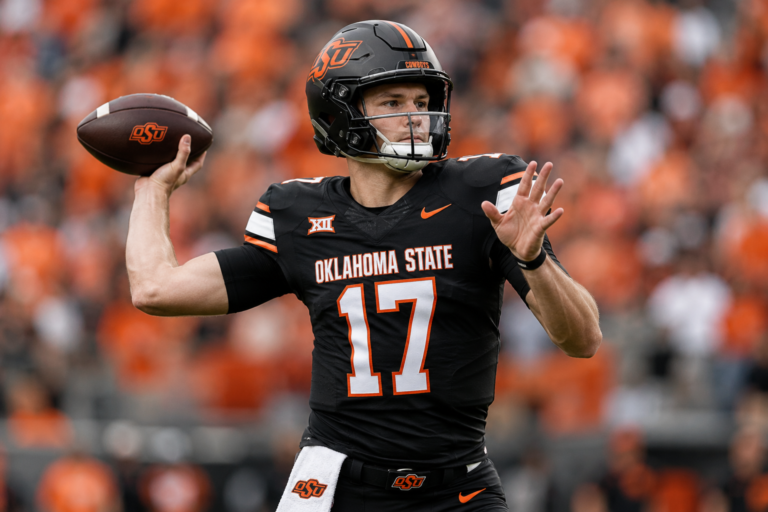
3. Drew Mestemaker, QB, Oklahoma State
Look, I’ve been on Mestemaker for over a year. I wrote about him months ago and had him in my top 15 before the season. There were throws that made me stop and say, “This guy has something.” The velocity. The ability to layer the football. The movement to create a play with his legs. Some of the throws he makes are flat-out special.
I see a little Mahomes-ish creativity and some Josh Allen flavor in the arm talent and ability to make a difficult play. Those are flashes of traits, not predictions of those careers. The jump in competition was the question, and he has given me reasons to believe, including 389 yards and three touchdowns against West Virginia and 304 yards with two touchdowns and no interceptions against UCF.
He still has work to do against pressure. His placement can get loose, and sometimes he trusts his arm enough to attempt a throw he should leave alone. But he is 20 years old. I’m looking at the projection and the upside, too. I want to see the rest of the season play out, but this is the kind of talent I’m willing to bet on. Welcome to the Mestemaker train.
4. Leonard Moore, CB, Notre Dame
With Moore, I love the patience. At 6-foot-2 and 197 pounds, he has the length, but he doesn’t immediately turn and run because a receiver gives him something at the line. He stays square and makes the receiver declare where he’s going. That allows him to use his reach without constantly trying to recover.
PFF has Moore allowing six receptions across 130 coverage snaps. I see some Sauce Gardner in the length and some Patrick Surtain II in the control. Smaller, sudden receivers will keep testing him, but he has the tools to become the corner an NFL defense trusts to handle an outside assignment. He remains my CB1.
5. Dylan Stewart, EDGE, South Carolina
If somebody puts Stewart ahead of Simmons, I understand it. At roughly 6-foot-5 and 250 pounds, the burst, length and bend are tremendous. When a player that tall gets low around the corner and keeps accelerating, you understand why people get excited. His physical ceiling is as high as anybody’s on this board.
The start of his season was interrupted by injury and suspension, but he returned against Florida with a sack and two forced fumbles. One came after he worked through a pulling blocker; another came when he beat the right tackle around the edge. That’s the talent showing up in different ways. I want more of those finished plays, consistently. Simmons gets my edge today, but Stewart can make this a difficult decision.
6. Jordan Seaton, OT, LSU
Seaton is here because of the pass protection. The feet are special. At 6-foot-5 and 311 pounds, he can move, redirect and recover in ways you don’t see from many tackles. A rusher can win the beginning of the rep and still have trouble finishing because Seaton has the athletic ability to get back in front.
PFF credits him with a 93.5% pass-block win rate when blocking without help. I see elite pass-protection upside, but the run blocking still needs to become more consistent. The hand placement and ability to stay attached have to improve. You see flashes of it. If he puts that part together, we’re talking about a potential franchise left tackle.
7. Charlie Becker, WR, Indiana
Becker is a big receiver, but there’s much more here than contested catches. At 6-foot-4 and about 208 pounds, he understands spacing, gets himself into position and doesn’t waste movement. I like the hands, the deep-ball tracking and how physical he becomes after the catch.
He has 30 receptions for 529 yards and eight touchdowns, including eight catches for 107 yards and two scores against Rutgers. I see some Puka Nacua in the route feel and physicality, with a little Alec Pierce in the vertical element. He can make the difficult catch, but I also like the ways he makes the quarterback’s job easier.
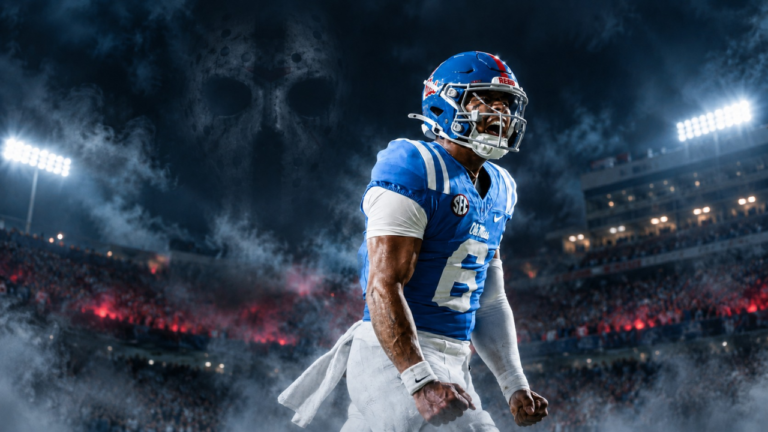
8. Will Echoles, DT, Ole Miss
Echoles creates trouble before the blocker gets comfortable. For an interior defender around 315 pounds, the change of direction and lateral movement stand out. He can get across a guard’s face and take away the space a quarterback wants to step into.
He has 13 tackles, three tackles for loss and half a sack. I don’t think that sack total tells the whole story of his value. I like the strength, the movement and the ability to affect the run along with the pass. His overall floor gives him the edge over Xavier Gilliam on my board. Gilliam is making that conversation interesting, though.
9. Trevor Goosby, OT, Texas
Goosby looks the part, and then his feet start moving. At 6-foot-7 and 325 pounds, he has the reach to make a speed rusher take the long way around, but he can actually stay with him. I especially like his hands when he gets them inside and establishes control early.
PFF has Goosby allowing seven pressures on 185 pass-blocking snaps. The next step is tightening up the technique, especially maintaining his balance when a rusher changes direction. Plenty of tackles have length. What interests me is how well Goosby moves with it.
10. Cam Coleman, WR, Texas
I wanted a more consistent start from Coleman, but the Oklahoma game reminded you what’s in there. He caught five passes for 110 yards and a touchdown, bringing him to 17 catches for 318 yards and five scores. At 6-foot-3 and 204 pounds, he can get downfield, track the football and adjust without fighting his own body.
The release has more quickness than you might expect from a receiver that size, and he has the strength to finish through contact. I still see a potential No. 1 receiver. Now I want him becoming somebody the offense consistently runs through. The ability is there. I want to see it take over more games.
11. Ashton Hampton, CB, Clemson
Hampton is a big, long, physical corner at 6-foot-2 and 205 pounds. He can change the route before the receiver really gets into it. When he lands his hands with control, he disrupts the release and throws off the timing between the receiver and quarterback.
My concern coming into the season was how he would handle smaller, quicker receivers. His fourth-down breakup against Malachi Toney was the kind of rep I wanted to see. Toney makes you deal with sudden movement, and Hampton stayed in position to challenge the throw. That matters. I still want consistency with his balance and transitions, but the length, physical coverage and ball awareness give him a strong foundation.
12. Jadan Baugh, RB, Florida
Baugh looks like an NFL lead back at 6-foot-1 and 225 pounds, but the feet are what separate him for me. He presses the line, makes a linebacker commit and waits for the opening without becoming hesitant. Then he puts his foot down and goes. That’s where I get some Le’Veon Bell in the patience and stop-start ability.
He has rushed for 672 yards and 12 touchdowns, averaging 6.1 yards per carry. Against Ole Miss, he handled 29 carries for 142 yards and three scores. The next two games were less productive, and I’m not ignoring that. But I like a back this size who can influence a defender and create a better running lane for himself.
13. Ellis Robinson IV, CB, Georgia
Robinson has the length, but I like how fluid he is. Some corners have to fight their own body when the receiver changes direction. Robinson can stay connected, turn and still put himself in position to challenge the football.
Against Alabama, PFF charted six yards allowed on three targets across 36 coverage snaps. That’s meaningful evidence against a talented passing game. I want him continuing to develop the strength and balance to handle physical routes, but the movement and ability to stay in phase are what make the outside-corner projection appealing.
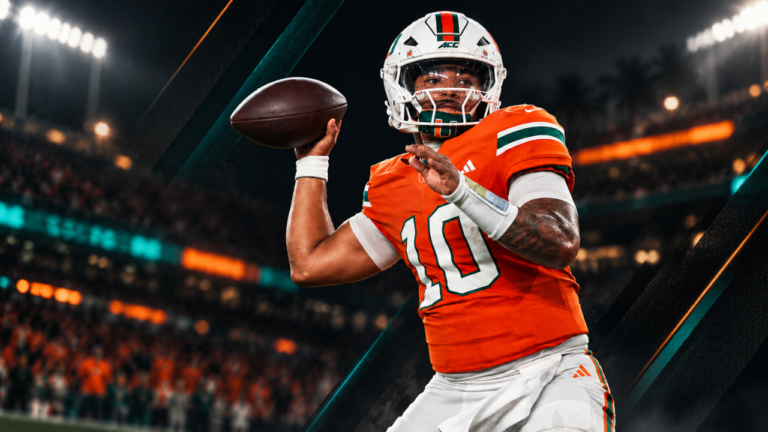
14. Darian Mensah, QB, Miami
When I watch Mensah, I keep coming back to how under control he looks. The feet, the balance, the way his body works together. He gives himself a chance to be accurate repeatedly, and the placement gives his receivers opportunities to run after the catch. With players such as Malachi Toney, that matters.
Through five games, he has thrown for 1,438 yards and 15 touchdowns without an interception, completing 84.2% of his passes. He opened the Wake Forest game with 24 consecutive completions. I see solid physical tools, but the accuracy and command are the selling points. NFL windows get smaller, so I want to keep testing the arm and his answers when the first look disappears.
15. Greg Johnson, IOL, Minnesota
Johnson has strong hands, real upper-body power and good enough feet to stay in front of people. At 6-foot-6 and 325 pounds, he has to manage his leverage, but I like how much actual game experience supports the versatility.
He opened the season at left guard before moving to center, and Minnesota reports that PFF has charged him with only one pressure in 202 pass-blocking opportunities. His move to center against Washington also helped earn him national Outland recognition. I’m still working through his best NFL position, but this is a lineman I can see a coaching staff trusting in more than one spot.
16. Arch Manning, QB, Texas
Manning hasn’t been as consistent as I wanted, but the talent hasn’t disappeared. He still makes throws where you say, “Wow.” The arm, the movement and the ability to deliver a difficult ball are there. Against Oklahoma, he threw for 260 yards and three touchdowns, but the two interceptions belong in the evaluation, too.
Obviously, there’s the lineage. What I need to see is more consistent decision-making when the big play isn’t available. Can he take the completion, protect the possession and keep the offense moving? I still think his talent puts him in the top-10 conversation, even with him at No. 16 here. I also think there’s a strong possibility he returns to school. More experience could help him turn those flashes into dependable quarterback play.
17. Trevor Lauck, OT, Iowa
Lauck looks like a classic Iowa offensive lineman to me. At 6-foot-5 and 314 pounds, he understands positioning, plays with strength and makes you work to beat him. His feet aren’t spectacular, but he knows how to put himself in position to win the block.
PFF has him allowing three pressures on 172 pass-blocking snaps this season. I see some Bryan Bulaga in the tough, technically sound, dependable style. He’s playing left tackle now, but I could see him settling on the right side in the NFL. I like the possibility of a lineman who quietly becomes somebody you count on for years.
18. Chris Cole, LB, Georgia
When I watch Cole, sometimes it barely looks like he’s running hard. Then I see how much ground he just covered. Those long strides eat up space in a hurry. At roughly 6-foot-3 and 235 pounds, he can close an opening faster than the ball carrier expects.
Cole has 30 tackles, 7½ tackles for loss and 2½ sacks. Against Alabama, he had eight tackles, 2½ tackles for loss, a sack and two pass breakups. I see some Arvell Reese-style flexibility in how you can use him across the front seven, although he isn’t as developed taking on offensive linemen. He also needs to control his pursuit and avoid overrunning plays. But that range gives a defense options.
19. KJ Bolden, S, Georgia
Some players look fast because they can run. With Bolden, I keep noticing how quickly he understands what’s happening. He reads the quarterback, understands where the route wants to go and gets moving early. He has a way of meeting the play instead of chasing it.
Against Alabama, he had seven tackles, half a sack and a pass breakup. He helped push the offense out of field-goal range with that late sack. I like being able to use him from depth, in the box or as a blitzer. The next step is controlling the aggression, securing the tackle and staying disciplined with his timing in coverage.
20. Xavier Gilliam, DT, Tennessee
Gilliam’s get-off is ridiculous. When I watch him, that first movement jumps out. I see elite get-off for an interior defender, followed by lateral quickness and violence in his hands. He can get a guard uncomfortable immediately, then extend and disengage without losing his balance.
He has 10 tackles for loss and five sacks. Against Arkansas, he opened with a strip-sack and recovered the football himself. I see some Byron Murphy II flavor in the interior explosion. Echoles has the edge because I trust the overall floor a little more, but Gilliam is a riser, man. He keeps playing like this, watch out.
21. Trinidad Chambliss, QB, Ole Miss
When I watch Chambliss, I see some Russell Wilson. The competitiveness, the movement and the way he keeps his eyes downfield while extending the play. His speed creates a problem for the defense. Come forward to stop him, and he can throw behind you. Stay back, and he can take the space himself.
Chambliss has 1,435 passing yards, 11 passing touchdowns, four interceptions and five rushing touchdowns. Against Vanderbilt, he accounted for four scores. The size and age matter, including that he would turn 25 before his rookie NFL season. I also want him protecting himself better and staying with clean reads longer. The arm gets tested on those long outside throws, but you can’t ignore the playmaking.
22. Kade Pieper, IOL, Iowa
Pound for pound, Pieper might be one of the strongest offensive linemen in this class. At 6-foot-3 and 298 pounds, he can get underneath a defender and move him. The lower-body power stands out, and he can reach a block or climb to the linebacker without looking heavy.
He’s playing right guard this season. Through six starts, PFF’s figures reported by 49ers Webzone show 313 offensive snaps and two pressures allowed on 173 pass-blocking snaps. Bigger defensive tackles can test his anchor, but I like the strength and movement together. Center remains a possible NFL fit.
23. Deuce Alexander, WR, Ole Miss
The more I watch Alexander, the more I see a first-round receiver. That’s where I am with him. The takeoff speed is elite. Reel Analytics measured him at 22.3 mph in Week 1, and you see that acceleration change how defenders play him. He makes a corner respect the deep ball, then uses that cushion to work underneath.
Alexander has 32 catches for 503 yards and five touchdowns. Against Florida, he caught seven passes for 134 yards and a score. I see some Jameson Williams in the acceleration, but I also like the feel for zone coverage, the willingness to work through the middle and the way he comes back to the quarterback. There’s more here than a guy who runs fast in a straight line.
24. Trey’Dez Green, TE, LSU
Green can catch, man. At 6-foot-7 and 242 pounds, he makes the throwing window bigger. Put the ball high and let him use that frame. You see the basketball background in how he establishes position, boxes out a defender and attacks the football.
Before the injury interrupted his season, he had 14 catches for 222 yards and a touchdown, including six catches for 104 yards and a score against Louisiana Tech. I need to see him healthy again, and the blocking still has to develop. But the receiving size and body control can give a quarterback an answer even when the defender appears to have the route covered.
25. Austin Simmons, QB, Missouri
When I watch Austin Simmons, he’s got a howitzer. The way the ball comes out, there is so much power and explosion. But he does other things well, too. I like the anticipation, the movement within the pocket and the timing to get the football into a window as the receiver arrives. He can take something off the throw when he needs to.
Simmons has thrown for 1,434 yards, 14 touchdowns and one interception. Texas A&M was a tougher performance, with 147 yards, a touchdown and an interception. That belongs in the evaluation alongside the exciting throws.
He doesn’t have a lot of career starts, and I have to account for that. He could return to school, and I want to see more against SEC competition. But this board is about where I stand today. Based on what I’ve seen, I see first-round quarterback talent. He could move up, and he could move down. I’m watching closely.
Just missed
There wasn’t enough room for everybody, and these were some of the toughest decisions on the board. Kingston Lopa, C.J. Carr, Lance Heard, Will Heldt, Nick Marsh, KJ Duff and David Stone are among the players still in the mix.
Lopa is a 6-foot-5 safety who finds the football, with five interceptions at this cutoff. That kind of playmaking keeps my attention. Carr is firmly in the quarterback conversation, and Heard gives you length and a powerful finisher who could have an NFL future at tackle or guard.
Heldt’s length, physicality and development keep him close. Marsh and Duff give me more receivers to consider, and Stone belongs in the discussion on the defensive interior. Leaving them out wasn’t easy. There are players here who could work their way onto the next board.
Remember, this is my ranking in October. The draft isn’t until April. Some players could rise, some could fall, and some might go back to school. I believe in what I’m seeing, but I’m still evaluating. There’s plenty of football left to change my mind.
Watch my full October top 25 breakdown